Dal 20 marzo al 29 aprile
Opendin 20.03
Il Meccanico
Via San Vitale 2/B, 37126 Verona
Orari: venerdì 16.00-19.00
sabato 10.00-12.00 e 16.00-19.00
visite guidate in altri giorni/orari su prenotazione anticipata
chiuso nei giorni: 4,5,25 aprile
Nel febbraio 2021 mi sono imbattuta casualmente in una grande quantità di piccole stampe fotografiche abbandonate accanto a un cassonetto. Ritratti di persone sconosciute, immagini di famiglie e luoghi anonimi: fotografie ormai prive di valore per chi le aveva gettate via, ma ancora cariche di tracce, presenze e memorie perdute. Da questo ritrovamento ha preso avvio una riflessione sul destino delle immagini e sulla fragilità della memoria fotografica.
Il progetto nasce come tentativo di interrogare ciò che resta quando il legame affettivo e narrativo con un’immagine si interrompe. Le fotografie recuperate sono state portate in camera oscura e messe a contatto con carta fotosensibile per ottenerne immagini negative: una sorta di eco visiva, un riflesso sbiadito di ricordi non più accessibili. A questo nucleo iniziale si sono progressivamente affiancate immagini provenienti dal mio archivio familiare, creando una relazione tra memorie intime e memorie anonime, entrambe destinate, seppur in modi diversi, a dissolversi nel tempo.
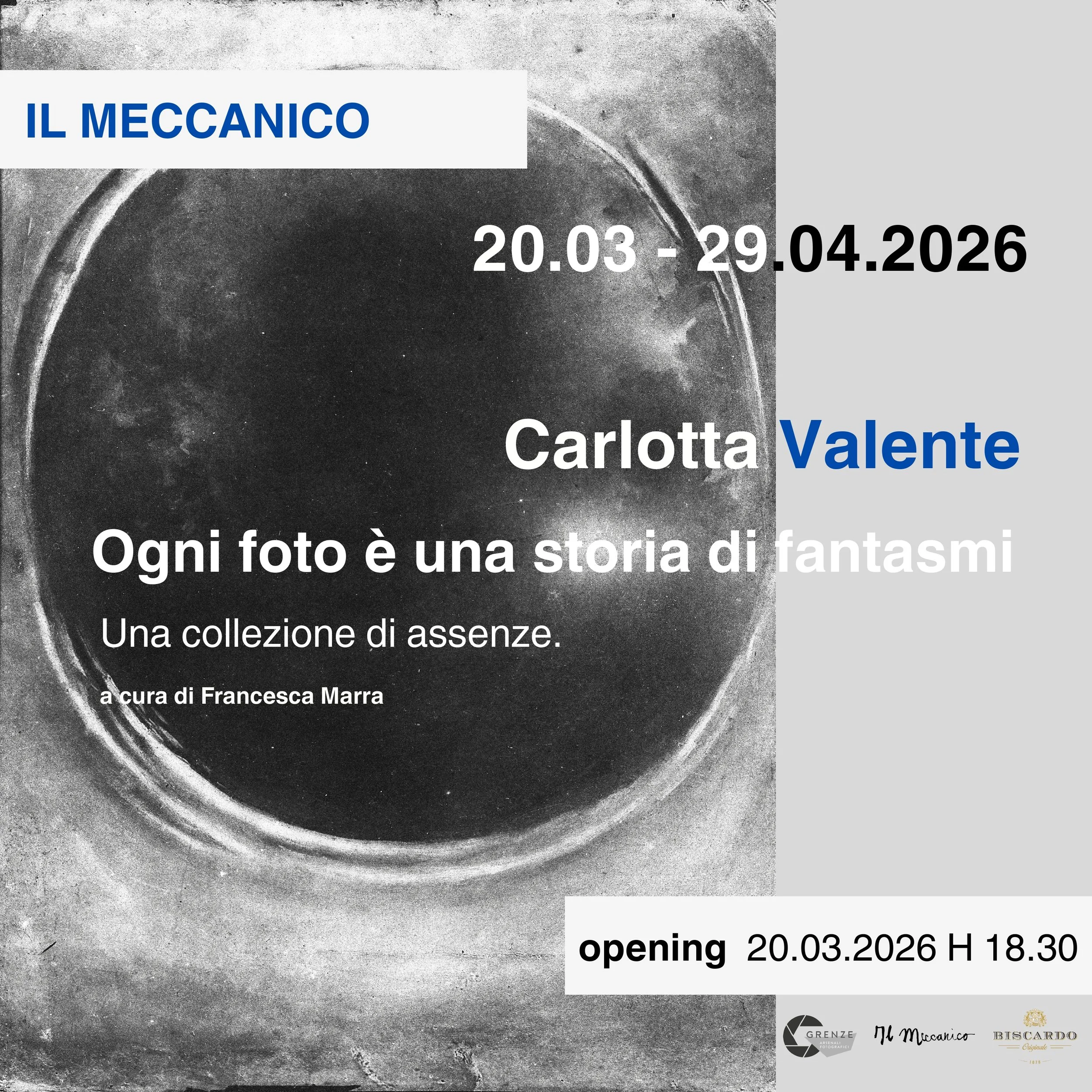
Il lavoro include anche lastre fotografiche di inizio Novecento, originariamente utilizzate come fondali neutri per ritratti in studio. In passato questi sfondi servivano a facilitare la postproduzione in camera oscura, permettendo di collocare il soggetto fotografato in un contesto diverso. Qui, però, il soggetto è assente: rimane solo lo spazio che avrebbe dovuto accoglierlo. Stampate ai sali d’argento in grande formato, queste immagini si trasformano in superfici vuote e sospese, evocando una presenza mancata e rafforzando l’idea di perdita che attraversa l’intero progetto.
Le stampe a contatto di fotografie vernacolari trovate per strada portano al centro l’impossibilità di conoscere i soggetti rappresentati. Rese negative e quasi ridotte a forme, queste immagini sono private di ogni residuo narrativo. Incorniciate singolarmente, con ampio spazio vuoto intorno, sottolineano la distanza irreversibile tra immagine e memoria. Il loro destino — essere abbandonate perché non più riconoscibili o necessarie — si riflette come una possibile prefigurazione del futuro delle mie stesse immagini familiari.
Nella cultura dell’antico Egitto si credeva che l’esistenza del defunto fosse legata alla possibilità che il suo nome continuasse a essere pronunciato nel tempo. Le immagini qui raccolte sembrano abitare una condizione analoga e allo stesso tempo opposta: sopravvivono come tracce materiali, ma private del nome, del racconto e della relazione che le rendevano vive nella memoria.
Nel suo insieme, il progetto si configura come una meditazione sul tempo, sulla perdita e sulla materialità della fotografia. Attraverso processi analogici e lenti, l’immagine fotografica si rivela non come strumento di conservazione, ma come spazio di trasformazione, in cui la memoria si deposita, si altera e, infine, scompare.
Carlotta Valente
Ogni foto è una storia di fantasmi. Una collezione di assenze trasforma l’immagine in un luogo di possibilità. Qui la memoria non si conserva, ma si evolve: emerge, svanisce, si reinventa. Ogni superficie diventa scenario di presenze mute, apparizioni che convivono con l’assenza e aprono a nuovi sguardi.
In questa tensione tra ciò che resta e ciò che sfugge, l’immagine fotografica si fa materia viva, capace di trasformarsi con chi la osserva e con il tempo stesso. Non si tratta di raccontare storie già scritte, ma di generare spazi di esperienza, piccoli teatri in cui passato e futuro si incontrano, dove la memoria si sospende e lascia emergere possibilità inattese.
Le fotografie diventano così presenze instabili, frammenti di mondi invisibili che continuano a abitare il presente. In questa collezione di assenze, ogni immagine mostra la sua capacità di evolvere, di creare nuove relazioni e nuove narrazioni, restituendo alla fotografia la sua natura più inquieta: testimone e fantasma, insieme.
Francesca Marra
In February 2021 I happened by chance upon a large quantity of small photographic prints abandoned next to a trash bin. Portraits of unknown people, images of families and anonymous places: photographs by now devoid of value for whoever had thrown them away, but still full of traces, presences and lost memories. From this finding began a reflection on the fate of images and on the fragility of photographic memory.
The project arises as an attempt to question what remains when the affective and narrative bond with an image is interrupted. The recovered photographs were taken to the darkroom and placed in contact with photosensitive paper in order to obtain negative images: a sort of visual echo, a faded reflection of memories no longer accessible. To this initial nucleus images coming from my family archive were progressively added, creating a relationship between intimate memories and anonymous memories, both destined, although in different ways, to dissolve over time.
The work also includes photographic plates from the early twentieth century, originally used as neutral backdrops for studio portraits. In the past these backgrounds served to facilitate postproduction in the darkroom, allowing the photographed subject to be placed in a different context. Here, however, the subject is absent: only the space that should have welcomed it remains. Printed in silver salts in large format, these images transform into empty and suspended surfaces, evoking a missing presence and reinforcing the idea of loss that runs through the entire project.
The contact prints of vernacular photographs found on the street bring to the center the impossibility of knowing the subjects represented. Rendered negative and almost reduced to forms, these images are deprived of every narrative residue. Framed individually, with ample empty space around them, they underline the irreversible distance between image and memory. Their destiny — to be abandoned because they are no longer recognizable or necessary — is reflected as a possible prefiguration of the future of my own family images.
In the culture of ancient Egypt it was believed that the existence of the deceased was linked to the possibility that his name would continue to be pronounced over time. The images collected here seem to inhabit an analogous and at the same time opposite condition: they survive as material traces, but deprived of the name, the story and the relationship that made them alive in memory.
Taken as a whole, the project takes shape as a meditation on time, on loss and on the materiality of photography. Through analog and slow processes, the photographic image reveals itself not as an instrument of preservation, but as a space of transformation, in which memory settles, alters itself and, finally, disappears.
Carlotta Valente
Every photograph is a story of ghosts. A collection of absences transforms the image into a place of possibility. Here memory is not preserved, but evolves: it emerges, fades, reinvents itself. Every surface becomes the setting for mute presences, apparitions that coexist with absence and open to new gazes.
In this tension between what remains and what escapes, the photographic image becomes living matter, capable of transforming itself with the one who observes it and with time itself. It is not a matter of telling stories already written, but of generating spaces of experience, small theaters in which past and future meet, where memory is suspended and allows unexpected possibilities to emerge.
The photographs thus become unstable presences, fragments of invisible worlds that continue to inhabit the present. In this collection of absences, every image shows its capacity to evolve, to create new relationships and new narratives, returning to photography its most restless nature: witness and ghost, together.
Francesca Marra